
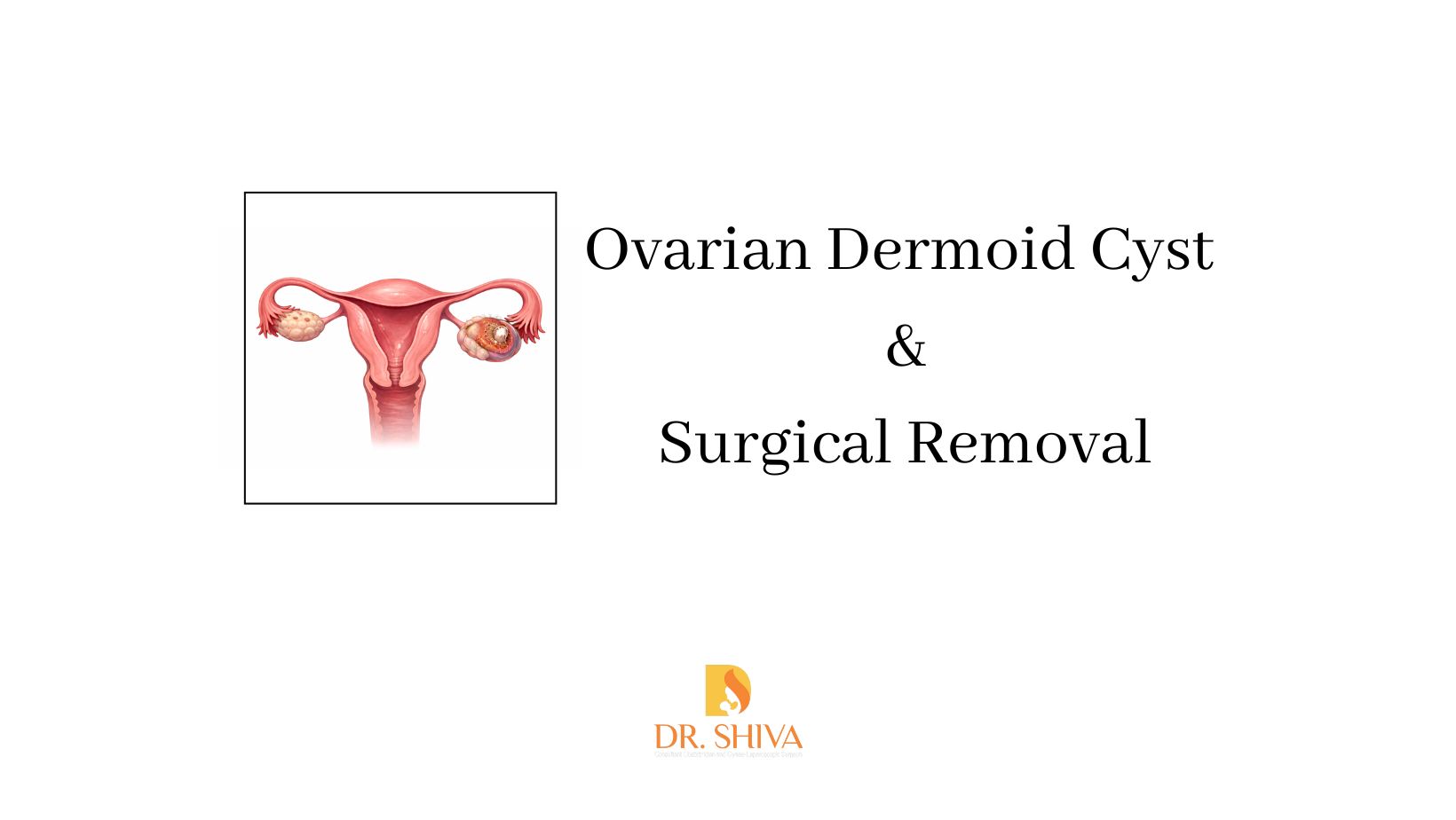
What is an ovarian dermoid cyst?
An ovarian dermoid cyst, medically known as a mature cystic teratoma, is a benign (non-cancerous) ovarian tumor. It develops from germ cells, which are capable of forming different types of body tissues. They may include hair, skin, fat, teeth, bone, or cartilage. Although benign, dermoid cysts can grow slowly over time and may reach large sizes if left untreated. They are highly treatable through modern surgical techniques.
Unlike functional cysts that form during a menstrual cycle, a dermoid cyst develops from germ cells. These are “master cells” present from birth that have the incredible ability to transform into any type of human tissue.
When these cells begin to grow abnormally within the ovary, they can produce:
- Ectodermal tissue: Skin, hair, and sweat glands.
- Mesodermal tissue: Fat, bone, cartilage, and muscle.
- Endodermal tissue: Thyroid or gastrointestinal tissue.
Causes of Ovarian Dermoid Cysts
Dermoid cysts are congenital, meaning they are present from birth, but they often go unnoticed until adolescence or adulthood.
Key points about their cause:
- Hormonal changes during puberty may trigger growth.
- Not caused by lifestyle, diet, or infection
- Not hereditary in most cases
Symptoms of Ovarian Dermoid Cysts
Small dermoid cysts are often asymptomatic and discovered incidentally. Larger cysts may cause symptoms such as:
- Abdominal or pelvic pain
- A feeling of fullness or bloating
- Visible abdominal swelling
- Irregular menstrual cycles
Complications
- Ovarian Torsion (Twisting Risk)
Large dermoid cysts can make the ovary twist. This cuts off blood supply, causing sudden severe pelvic pain with nausea and vomiting, and is a surgical emergency that may lead to loss of the ovary if untreated. - Cancer? (Malignant Transformation)
Over 98% of dermoid cysts are benign. Rarely (1–2%), they can become cancerous, usually in women over 40–50. In younger women, the risk is extremely low.
How Is a Dermoid Cyst Diagnosed?
Diagnosis usually involves a combination of:
- Ultrasound
- First-line imaging test
- Often shows characteristic features such as mixed solid and cystic components.
- CT Scan or MRI
- Helps confirm the diagnosis
- Clearly identifies fat, hair, and calcified structures like bone or teeth
- Blood Tests
- Tumor markers may be checked, especially in adolescents, to rule out malignancy.
Treatment Options for Dermoid Cysts
Observation
- Small, asymptomatic cysts may be monitored.
- Regular imaging is required.
Surgical Management
Surgery is recommended when:
- The cyst is large.
- The patient is symptomatic.
- There is a risk of torsion or rupture.
- Diagnosis is uncertain.
Types of Surgery
- Laparoscopic (Keyhole) Surgery – minimally invasive, preferred when feasible
- Open Surgery (Laparotomy) – reserved for very large or complicated cases
In young patients, fertility preservation is a key priority, and surgeons aim to remove the cyst while conserving healthy ovarian tissue.
Case: Successful Removal of a 20 cm Dermoid Cyst in a 26-Year-Old Using Keyhole Surgery
Ovarian cysts are commonly seen in women of reproductive age, but discovering a large ovarian dermoid cyst can be alarming for both the patient and family. Thanks to advances in minimally invasive surgery, even large cysts can now be treated safely while preserving future fertility.
A 26-year-old woman presented with abdominal discomfort and progressive abdominal distension. Imaging revealed a giant ovarian dermoid cyst measuring approximately 20 cm.
Key Findings:
- The cyst occupied a large portion of the abdominal cavity.
- Contained significant amounts of hair and bone/cartilage, a classic feature of dermoid cysts
Surgical Approach:
Despite the large size of the cyst, the surgical team opted for laparoscopic (keyhole) surgery, prioritizing:
- Minimal scarring
- Faster recovery
- Preservation of fertility
The cyst was carefully decompressed and removed using specialized techniques to prevent spillage of cyst contents. Healthy ovarian tissue was preserved successfully.
Outcome:
- Surgery was completed without complications.
- Blood loss was minimal.
- The patient recovered well and was discharged early.
Conclusion
Dermoid cysts, though benign, can grow to impressive sizes and cause significant discomfort if not addressed. This case highlights how advanced laparoscopic techniques allow even very large dermoid cysts to be removed safely, even in young patients, while protecting ovarian function and future fertility.
Early diagnosis, expert surgical care, and a patient-centered approach are key to achieving excellent outcomes. For more details, contact us.